
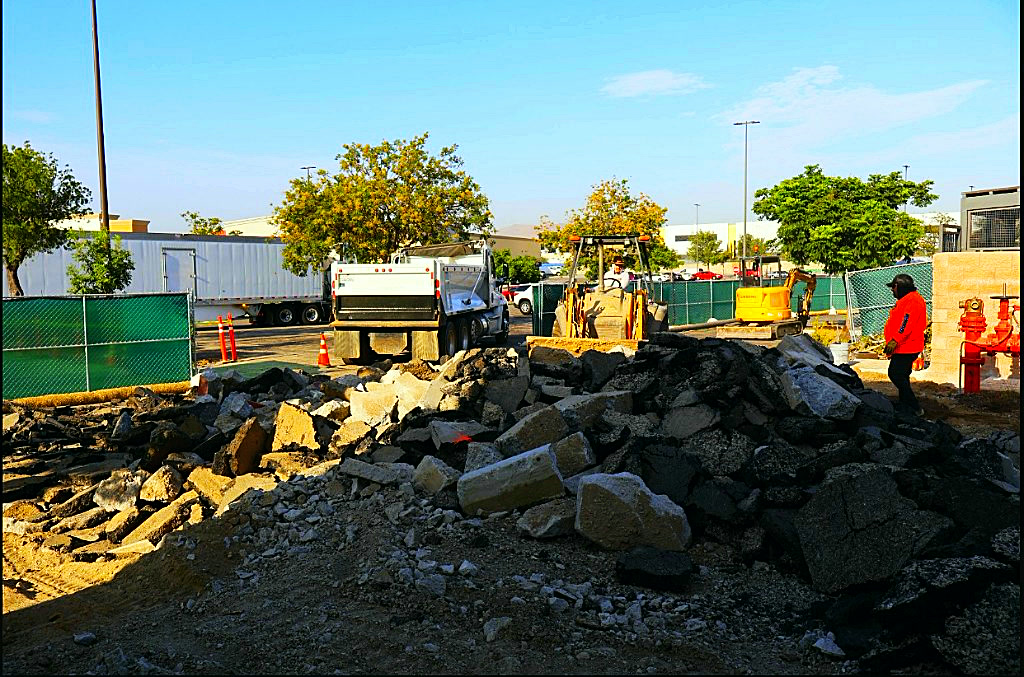
Structural Demolition
Complete takedown of warehouses, retail centers, industrial facilities, and office structures using high-reach excavators and controlled demolition methods on commercial redevelopment sites.
Commercial Demolition
Structural demolition, selective interior demo, site clearing, concrete and asphalt removal, slab removal, debris hauling, and redevelopment preparation for commercial developers, general contractors, municipalities, and commercial builders across the Inland Empire, Orange County, and Los Angeles County.
Quick answer: Mendozer X Earthworks Inc. is a licensed commercial demolition contractor in Southern California providing structural demolition, selective interior demo, site clearing, concrete and asphalt removal, slab removal, debris hauling, and redevelopment preparation for warehouse, retail, industrial, and municipal projects.
Try It
Step through a permitted commercial demo program — utilities, hazmat, structural takedown, and export.
Phase 1 of 6
Survey & Permits
As-built survey, hazmat screening, and demolition permits filed with agency before any structural work.
Education
Commercial redevelopment does not start with grading — it starts with removing what is already there. Existing structures, concrete slabs, asphalt paving, curbs, foundations, and underground improvements must be demolished, hauled, and cleared before earthwork and vertical construction can proceed. Demolition executed without proper permits, utility disconnects, or debris management creates safety hazards, agency shutdowns, and buried conflicts that stall every downstream trade.
Selective demolition allows portions of a site or building to remain active while targeted improvements are removed — a common requirement on commercial corridors where adjacent tenants continue operating. Structural demolition clears entire buildings for ground-up redevelopment. Site clearing removes pavements, curbs, sidewalks, and landscape improvements to deliver a bare pad. Each scope requires different methods, equipment, permits, and sequencing — and conflating them drives cost overruns and schedule delays.
Debris hauling is not an afterthought. Commercial demolition generates significant concrete, asphalt, steel, and mixed debris that must be segregated, hauled to certified facilities, and documented for project compliance. On Southern California sites, demolition also intersects with hazmat surveys, dust suppression ordinances, and tight urban logistics. Mendozer X Earthworks Inc. coordinates demolition as a sequenced commercial operation — safe, permitted, and efficient — so grading and new construction start on a truly cleared site.
Root Causes
Structural takedown that starts before gas, electric, water, and sewer lines are verified disconnected creates safety incidents, agency violations, and full-project shutdowns.
Demolition mobilized without approved permits, fire department notification, or environmental clearance triggers stop-work orders that stall grading for weeks.
Structural demo that precedes asbestos surveys exposes crews to regulated materials and forces costly mid-project abatement delays.
Partial slab and footing removal leaves buried concrete that conflicts with new utilities, footings, and grading plans — forcing re-excavation after earthwork mobilization.
Uncontrolled demolition debris overwhelms site access, blocks haul routes, and violates export permits on tight urban parcels.
Full-building takedown without phasing, dust suppression, or access controls disrupts adjacent tenant operations and triggers enforcement actions.
Warning Signs
Developers and GCs should address these warning signs before they trigger inspection holds, change orders, or schedule slips.
City or Cal/OSHA halts demolition after discovering asbestos, lead, or regulated materials not properly abated before structural takedown begins.
Gas meters, electrical panels, or water lines still live when demolition equipment arrives — creating immediate safety holds.
Mass excavation uncovers remnant footings, slabs, or vaults not removed during demolition — forcing change orders and schedule slips.
City rejects permit applications due to missing environmental documentation, fire department sign-off, or incomplete utility disconnect verification.
Vibration, dust, or debris impact from demolition triggers complaints from neighboring commercial tenants and municipal enforcement.
Demolition rubble stockpiled on haul routes or building pads prevents earthwork equipment mobilization.
Final demolition inspection not cleared, preventing the city from issuing new construction permits.
Existing paving, curbs, or sidewalks left in place conflict with new civil plans and require costly re-removal during grading.
Site Evaluation
Common Issues
Demolition that leaves remnant slabs, footings, or paving creates conflicts during grading and utility installation — forcing costly re-removal after earthwork mobilization.
Active gas, electric, water, or sewer lines not properly capped before demolition create safety incidents and agency violations that halt the entire project.
Uncontrolled demolition debris overwhelms site access, blocks earthwork equipment, and violates haul route permits on tight commercial parcels.
Demolition that precedes proper abatement triggers stop-work orders and costly mid-project delays on commercial redevelopment sites.
Vibration, debris impact, or undermining of shared walls damages neighboring commercial buildings and triggers liability claims.
Demolition executed without proper city permits, fire department notification, or final inspection clearance prevents issuance of new building permits.
Service Breakdown
Commercial demolition is the controlled removal of existing structures, pavements, slabs, foundations, and site improvements — coordinated safely and efficiently with utility disconnects, debris hauling, and environmental compliance — to prepare a development site for new construction.
Complete takedown of warehouses, retail centers, industrial facilities, and office structures using high-reach excavators and controlled demolition methods on commercial redevelopment sites.
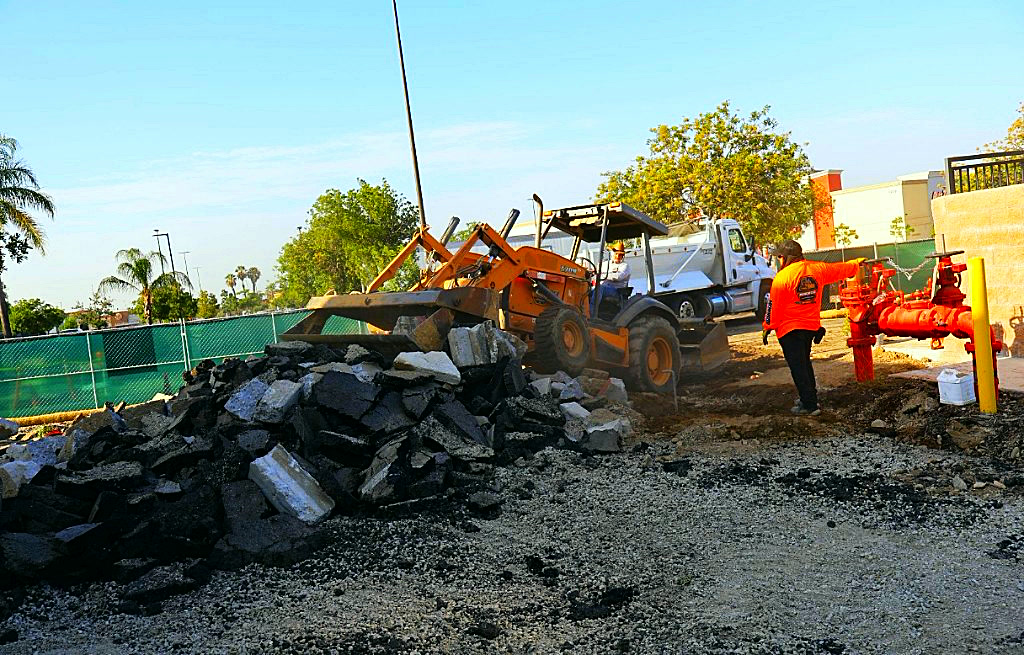
Targeted removal of partitions, ceilings, MEP systems, and finishes for tenant improvement and adaptive reuse without compromising structural elements required for the new occupancy.
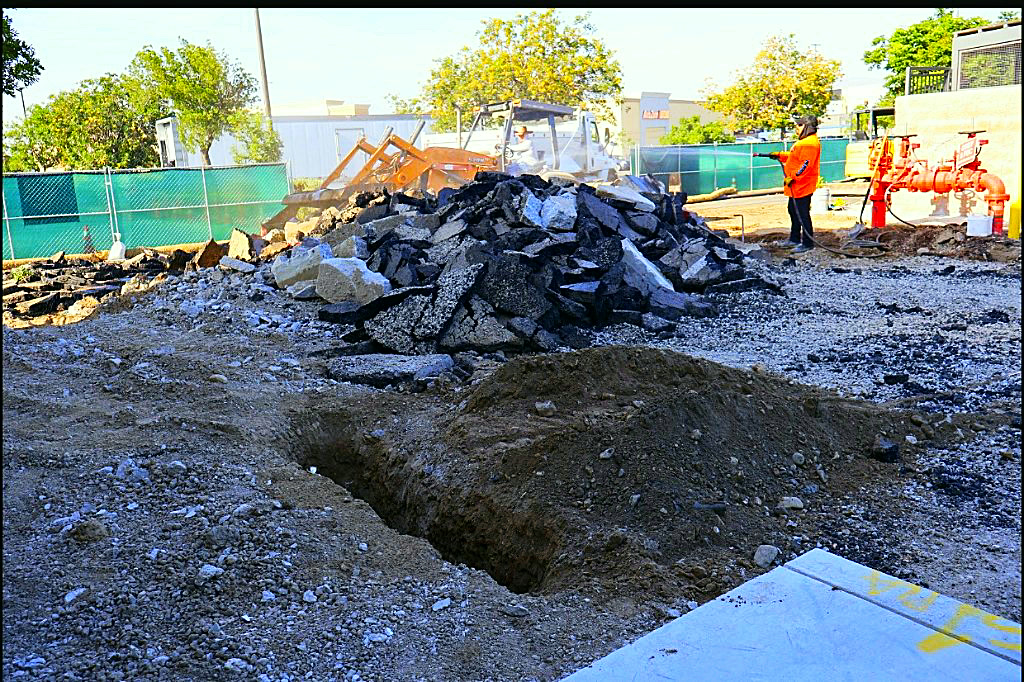
Precision removal of specific building sections, additions, or improvements while preserving portions of the structure or site that remain in service.
Demolition of asphalt paving, curbs, sidewalks, retaining walls, and landscape improvements to deliver a cleared redevelopment parcel ready for earthwork.
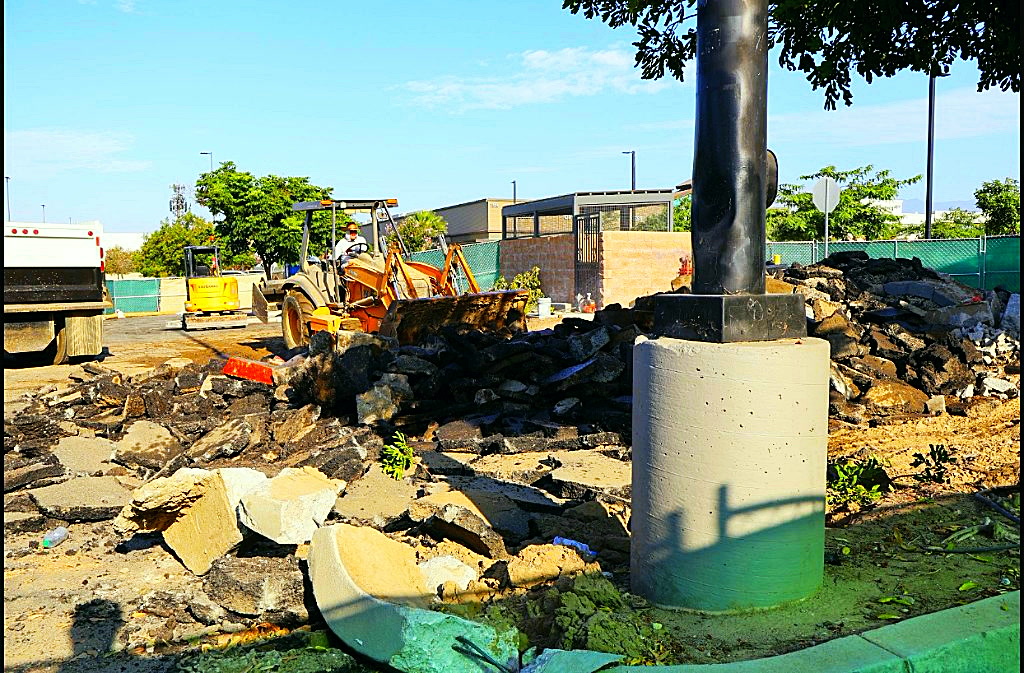
Breaking, removal, and export of concrete flatwork, walls, and structural elements — including foundations, slabs, and below-grade improvements.
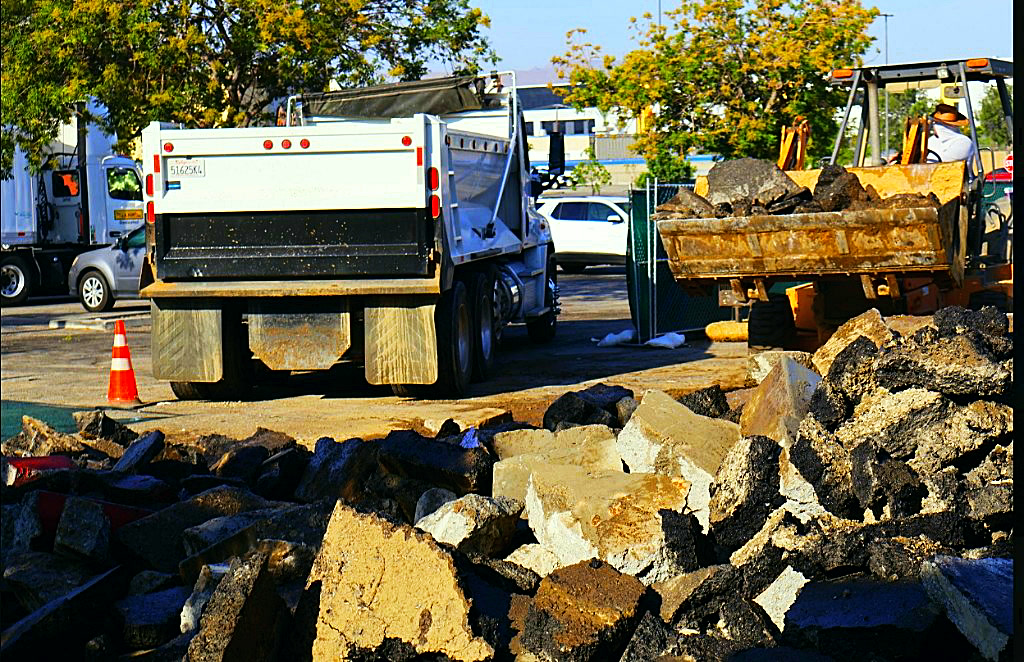
Milling and removal of existing asphalt pavement, drive aisles, and parking areas to prepare subgrade for new paving or earthwork operations.
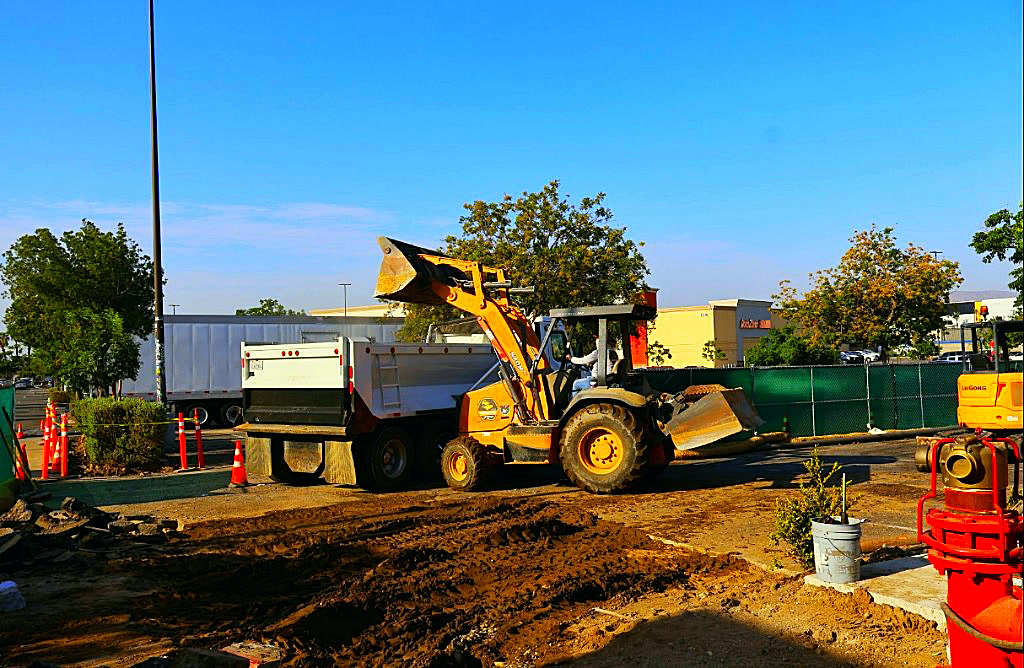
Breaking and export of existing slabs-on-grade, loading dock aprons, and concrete paving to deliver bare subgrade for new civil and structural plans.
Daily hauling of demolition debris to certified recycling and disposal facilities with load tracking and compliance documentation for project records.
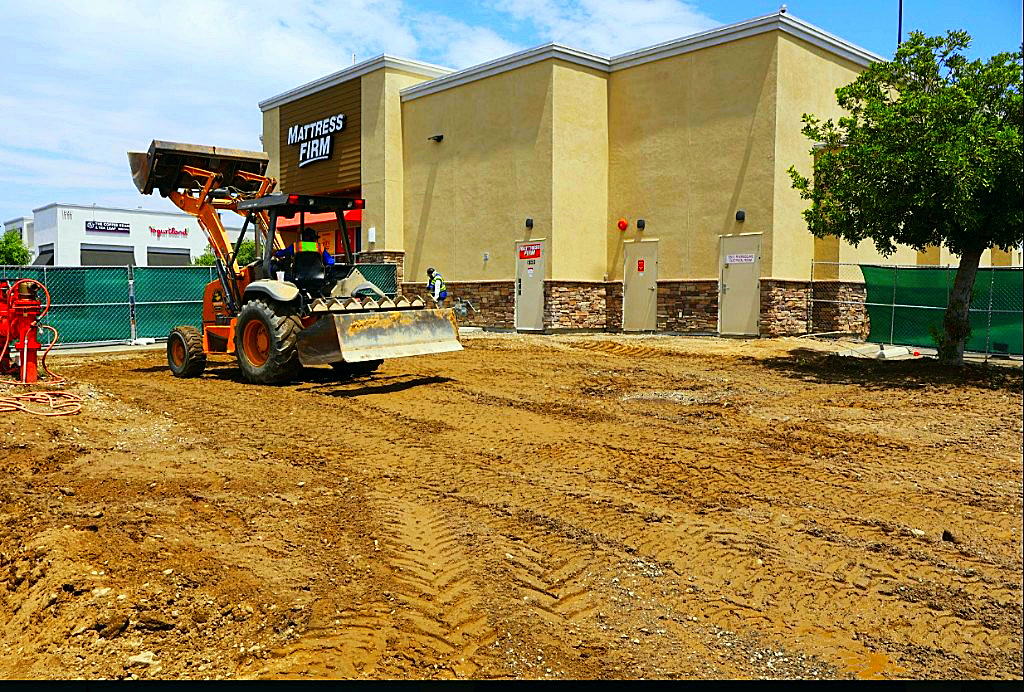
Complete demolition and clearing scope — structure, slabs, paving, and improvements removed — delivering a bare pad ready for grading, utilities, and new construction.
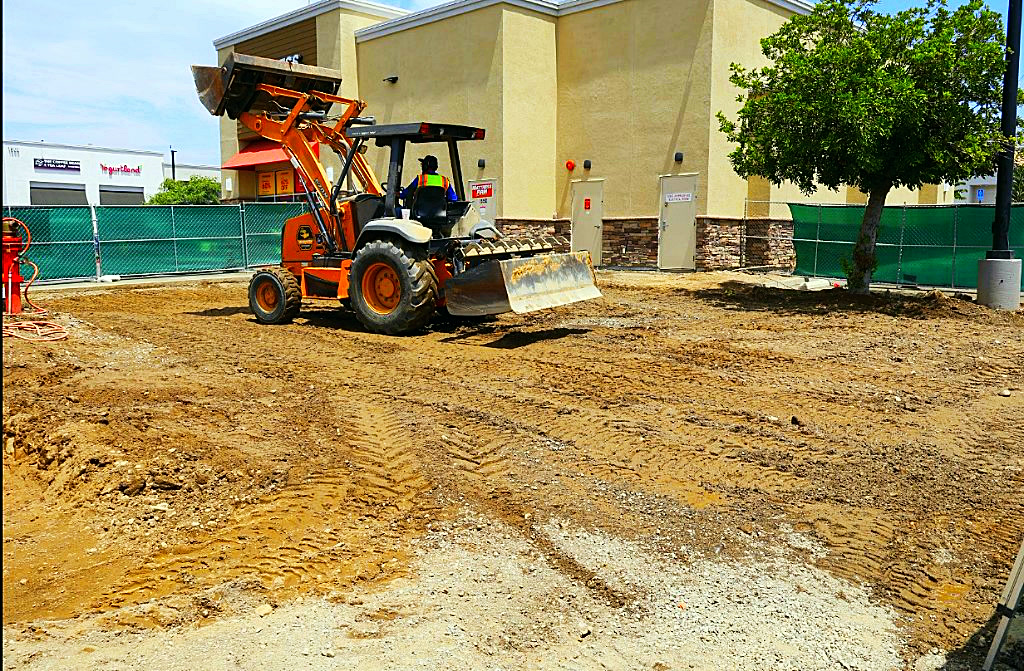
Staged takedown on partially occupied commercial properties with controlled access zones, dust suppression, and sequenced work areas.
Removal of abandoned wet and dry utilities, vaults, and underground structures coordinated with environmental and utility contractors.
Demolition sequenced around licensed asbestos, lead, and hazardous material abatement with proper containment access and clearance documentation.
Scope
Our Process
Every commercial scope follows the same preconstruction, field execution, and closeout sequence — sequenced with your GC schedule and inspection milestones.
Site walks, plan review, specifications, estimating, and schedule alignment before mobilization.
Preconstruction
Superintendent and estimator walk the parcel with your project team. We review civil grading plans, geotechnical recommendations, SWPPP requirements, haul routes, staging limits, and adjacent operations before your bid due date — so quantities and production assumptions reflect actual field conditions.
Deep Dive
Commercial demolition follows a defined sequence: environmental survey and abatement, utility disconnect and verification, permit issuance, structural takedown, foundation and slab removal, debris hauling, and final inspection clearance. Skipping any step transfers risk downstream. Buried slabs discovered during grading, active utilities encountered during takedown, or debris stockpiled on building pads each stall earthwork and vertical construction by weeks.
Selective demolition serves a different purpose than structural demolition. When a commercial building is being repositioned for a new tenant, interior demo removes partitions, ceilings, and MEP systems while preserving the structural shell. When a site is being redeveloped ground-up, structural demolition clears the entire building and site improvements. Matching the demolition method to the redevelopment plan prevents over-scoping and protects budget.
Debris hauling capacity must be planned before mobilization — not after the pile grows. Commercial demolition on warehouse and retail sites generates hundreds of tons of concrete, asphalt, and mixed debris. Daily haul schedules, recycling segregation, and disposal facility routing keep the site clear for grading equipment. Mendozer X Earthworks Inc. coordinates demolition, hauling, and site clearing as a single scope so developers and GCs receive a bare pad — not a partially cleared site that blocks earthwork.
Commercial developers and GCs should treat demolition clearance as a certified project milestone. A properly permitted, abated, cleared, and inspected demolition delivers a clean starting point for earthwork — reducing hidden foundation conflicts and protecting schedule for every trade that follows.
Mendozer X Earthworks Inc. provides honest pre-bid walks and itemized demolition estimates. We do not recommend full structural takedown when selective interior demo achieves your redevelopment goals — and we will not underbid debris export volumes to win work. If phased demolition, a narrower clearing scope, or sequenced abatement keeps your budget and schedule intact, we document that upfront with what is required to pass inspection and hand off a cleared pad.
Why Mendozer X
Complete commercial building takedown with high-reach equipment sized for urban and industrial parcels.
Precision removal preserving structural elements required for adaptive reuse or phased redevelopment.
Targeted demo of partitions, ceilings, and MEP for tenant improvement scopes.
Paving, curbs, sidewalks, and landscape improvements removed to deliver a cleared parcel.
Foundations, slabs, and flatwork broken and exported to certified facilities.
Existing pavement milled and removed to prepare subgrade for new paving or earthwork.
Daily export with recycling segregation and compliance documentation.
Complete clearing scope delivering a bare pad ready for grading and new construction.
Demolition sequenced after verified utility disconnects and abatement clearance.
"Mendozer X Earthworks Inc. completed structural demolition and foundation removal on our warehouse redevelopment ahead of grading mobilization. Clean bare-pad handoff, proper abatement sequencing, and zero debris backlog blocking earthwork."
Yes. We routinely execute phased and selective demolition on partially occupied commercial properties — maintaining controlled access zones, dust suppression, and sequenced work areas that allow adjacent tenants and operations to continue.
Yes. Daily debris hauling is a standard part of our commercial demolition scope. We segregate concrete, asphalt, steel, and mixed debris, haul to certified recycling and disposal facilities, and provide documentation for project compliance records.
We require verified utility disconnects before structural demolition begins. We coordinate sequencing with your utility contractors and verify cap documentation for gas, electric, water, sewer, and communications lines.
Yes. Concrete and slab removal is a standard scope item. We break, remove, and export existing foundations, slabs-on-grade, flatwork, and below-grade improvements to deliver bare subgrade for new construction.
Yes. We mill and remove existing asphalt paving, drive aisles, and parking areas as part of site clearing and redevelopment preparation scopes.
Selective demolition removes specific building sections or interior improvements while preserving the structural shell or remaining site operations. Structural demolition is complete building takedown for ground-up redevelopment. We scope each project based on your redevelopment plan.
We sequence our demolition work around licensed abatement contractors. We do not self-perform abatement, but we coordinate scheduling, containment access, and clearance documentation before structural demolition begins.
Requirements vary by city and project scope. Most jurisdictions require a demolition permit, utility disconnect verification, fire department notification, and sometimes environmental review. We coordinate permit pathways during the pre-bid phase.
Warehouses, distribution centers, retail centers, industrial facilities, office buildings, municipal structures, and parking improvements across the Inland Empire, Orange County, and Los Angeles County.
Duration depends on structure size, hazmat requirements, slab and foundation depth, and debris export logistics. We provide realistic production schedules during the estimate phase based on site-specific scope and permit timelines.
Yes. Mendozer X Earthworks Inc. is a California licensed heavy civil contractor (Lic. #1069854), insured, and bonded. We work exclusively on commercial demolition and site clearing for developers, GCs, and property owners.
We serve the Inland Empire, Orange County, and Los Angeles County — including Riverside, Corona, Ontario, Rancho Cucamonga, San Bernardino, Anaheim, Irvine, Orange, Los Angeles, and Long Beach.
Service Areas
Mendozer X Earthworks Inc. mobilizes across the Inland Empire, Orange County, and Los Angeles County for commercial excavation, grading, demolition, paving, concrete, and site development.
Get Started
Request a site walk and itemized estimate for your developer or GC-led project across Southern California.
Ready to Break Ground
Get a fast, no-obligation estimate for your next commercial project. We handle excavation, grading, demolition, paving, and concrete from the Inland Empire to LA County.